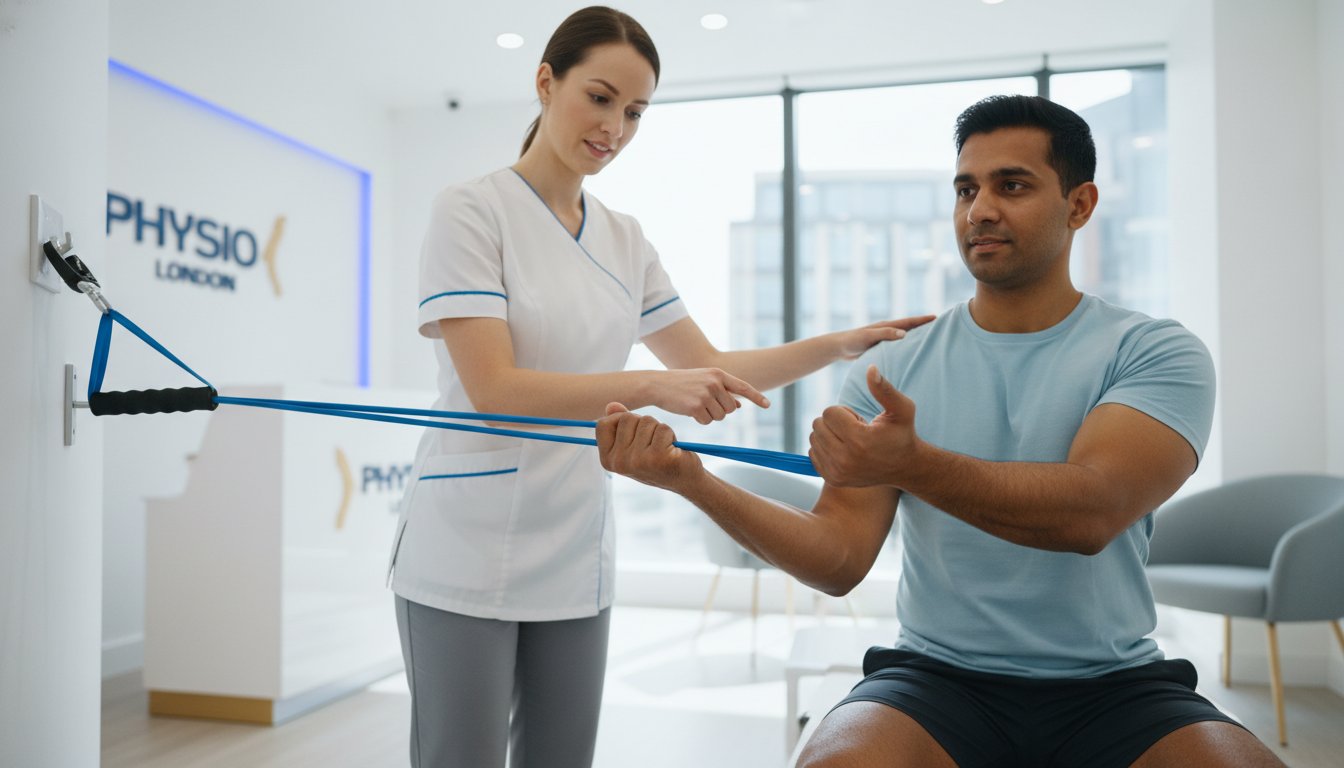
Resting your arm for two weeks won’t fix your injury; it usually just delays the inevitable return of pain. You’ve likely felt that sharp, searing jolt when reaching for a coffee mug or struggled through another restless night because your forearm won’t stop aching. It’s incredibly frustrating when 40% of individuals with tennis elbow find their symptoms returning within 12 months because they only addressed the surface level symptoms. You deserve a solution that lasts longer than a temporary ice pack.
At Maximal Physio, we believe your body is built for resilience, not just pain management. We’re going to move beyond quick fixes to uncover the biomechanical why behind your discomfort and provide a professional roadmap to restore your movement. You’ll discover how to transition from acute irritation to peak performance through a structured, evidence-based recovery plan. This guide outlines the exact phases of tendon remodeling required to reclaim your strength and reach your maximal potential in sport and life.
Key Takeaways
- Understand the biomechanical drivers of forearm pain and why this condition impacts manual professionals and athletes far beyond the tennis court.
- Uncover the “Rest Trap” and learn why avoiding movement or relying on temporary cortisone injections can compromise your long-term tendon health.
- Follow a professional, phased roadmap to overcome tennis elbow by transitioning from reactive pain modulation to progressive isometric strengthening.
- Discover how root-cause resolution and advanced tools like Shockwave Therapy can stimulate healing and resolve even the most chronic musculoskeletal cases.
- Shift your focus from mere symptom management to maximal performance by utilizing evidence-based strategies that restore your full freedom of movement.
Beyond the Name: Understanding Tennis Elbow and Lateral Epicondylitis
You don’t need a racquet to suffer from this condition. While the name suggests a sports injury, Tennis elbow, or lateral epicondylitis, is a common musculoskeletal challenge affecting 1% to 3% of the adult population annually. Data from the Bureau of Labor Statistics indicates that manual professionals, including carpenters, plumbers, and office workers who type for more than 4 hours a day, represent over 95% of all clinical cases. Your pain isn’t a badge of an athlete; it’s a signal that your forearm’s biomechanics have reached their current limit.
Modern physiotherapy has evolved significantly. We’ve shifted from calling it “tendonitis” to “tendinopathy” in elite clinical circles. The suffix “-itis” implies an acute inflammatory response, but evidence-based research shows that chronic elbow pain is rarely about inflammation. It’s about the health and resilience of your tissue. This shift in language reflects our commitment to root-cause resolution. We focus on your long-term results rather than chasing a temporary “quick fix” for swelling that isn’t actually there.
Chronic pain creates a mental drain that saps your daily productivity. When every door handle or coffee cup becomes a potential source of sharp discomfort, your mental focus shifts from thriving to surviving. This psychological burden can decrease workplace efficiency by as much as 40% in manual trades. We want to restore your freedom to move without hesitation, ensuring your body is a tool for your success rather than a barrier.
Common Symptoms and Red Flags
The signature symptom is a persistent burning sensation on the lateral aspect of your elbow. You might notice your grip strength failing during simple tasks like turning a wrench or shaking hands. Pay attention to the timing of your discomfort. Morning stiffness often suggests a lack of blood flow and tissue stagnation. In contrast, pain that intensifies during activity indicates that your tendon’s current load tolerance is being exceeded. If you can’t lift a half-gallon of milk without sharp pain, your tendon is signaling a significant capacity deficit.
Why It’s Not Just Inflammation
Tendinosis is a degenerative process characterized by the breakdown of collagen fibers rather than an acute inflammatory state.
Your body enters a cycle of failed healing responses where the Extensor Carpi Radialis Brevis (ECRB) tendon fails to repair itself effectively. Micro-tears begin to accumulate in the tissue. This lack of structural integrity leads to long-term dysfunction and a weakened musculoskeletal chain. We don’t just want to mask the pain; we aim for a maximal recovery that rebuilds the tendon’s capacity to handle high-performance demands and ensures your longevity in whatever movement you choose.
The Biomechanics of Pain: Why Your Elbow Is Struggling
Understanding your recovery starts with analyzing the mechanical load placed on your forearm. Your lateral epicondyle, the bony prominence on the outer edge of your elbow, serves as the anchor point for the common extensor tendon. This structure manages the forces generated by the muscles that lift your wrist and straighten your fingers. When you develop Tennis Elbow (Lateral Epicondylitis), the issue is rarely just “inflammation.” Instead, it’s a failure of the tendon to adapt to repetitive tension. Data from the British Medical Journal indicates that this condition affects approximately 3% of the population, most frequently occurring in individuals between the ages of 35 and 50. It’s a signal that your current movement patterns have exceeded your tissue’s capacity for resilience.
The ECRB: The Workhorse of the Forearm
The Extensor Carpi Radialis Brevis (ECRB) is the primary muscle implicated in tennis elbow. It’s a unique muscle because it works hardest when your elbow is fully extended, providing essential stability to the wrist. This specific positioning makes it vulnerable. During repetitive gripping or twisting, the ECRB can rub against bony bumps, causing microscopic wear. We often call this “overuse,” but it’s more accurately described as “misuse” of biomechanics. If your wrist is flexed while you grip, the ECRB must work 40% harder to maintain stability. This persistent mechanical disadvantage leads to:
- Degradation of collagen fibers within the tendon.
- Increased sensitivity of local nerve endings.
- Reduced grip strength as the brain “shuts down” muscle output to protect the joint.
To reach your maximal physical potential, we have to look at how you use your hands in space. Small shifts in wrist angle can dramatically reduce the load on the ECRB, allowing the tendon to heal without you having to stop moving entirely.
The Kinetic Chain Connection
Your elbow doesn’t live on an island; it’s a middleman between your shoulder and your hand. If your scapular stabilizers are weak, your elbow is forced to overcompensate for the lack of proximal stability. Clinical studies show that roughly 60% of patients with lateral elbow pain also demonstrate significant strength deficits in their shoulder external rotators. When the shoulder fails to provide a stable base, the forearm muscles take the brunt of every lift, pull, and swing.
Wrist flexibility also plays a vital role. If your wrist joint is stiff, the muscles must work through a restricted range, increasing the “tug” on the lateral epicondyle. Even your neck contributes to the picture; irritation at the C5 or C6 nerve roots can lead to muscle weakness that makes the elbow more susceptible to strain. Achieving a root-cause resolution requires a holistic assessment of these connections. We don’t just treat the spot that hurts; we optimize your entire kinetic chain to ensure long-term freedom and peak performance.

Why Cortisone and Passive Rest Often Fail for Tennis Elbow
Many patients arrive at our clinic after months of “taking it easy,” only to find their tennis elbow is more sensitive than when they started. This is the “Rest Trap.” While it feels intuitive to stop moving when you’re in pain, total immobilisation is actually your tendon’s worst enemy. When you stop using your forearm muscles, you trigger disuse atrophy. Research indicates that within just 14 days of inactivity, muscle fibers begin to weaken and tendon stiffness decreases. You aren’t just resting; you’re deconditioning. This makes the eventual return to activity even more jarring for the tissue, often resulting in a flare-up the moment you pick up a racquet or a heavy grocery bag.
Braces and straps fall into a similar category. While a counterforce brace can reduce strain on the tendon by 15% to 22% during a specific task, it remains a temporary band-aid. Relying on a strap doesn’t fix the underlying weakness in your forearm extensors. It simply shifts the load elsewhere. To achieve a maximal recovery, we must move beyond masking symptoms and start building a body that can handle the demands of your lifestyle. For a clear perspective on tennis elbow – symptoms, causes and treatment, it’s clear that modern clinical guidelines are shifting away from passive reliance on these external supports.
The Downside of Cortisone Injections
Cortisone is a powerful anti-inflammatory, but lateral epicondylitis isn’t primarily an inflammatory condition; it’s a degenerative one. A landmark study published in the Lancet found that patients receiving corticosteroid injections had a 54% recurrence rate within a year, compared to just 5% in the physiotherapy group. These injections provide a “honeymoon period” of 4 to 6 weeks where pain vanishes. This is dangerous. Without pain as a biofeedback mechanism, you’re likely to overstress the tendon, leading to micro-tears and structural failure. We reject these quick fixes because we prioritize your long-term potential over a temporary mask. Repeated steroid use can actually lead to “tendon softening,” permanently compromising the integrity of your musculoskeletal system.
Moving Beyond the ‘Wait and See’ Approach
The old-school “wait and see” method is a gamble with your health. We advocate for “active rest” or progressive load management. This means finding the maximal amount of movement you can perform without aggravating the injury. Instead of waiting for the pain to disappear, we focus on rebuilding the load-bearing capacity of the extensor carpi radialis brevis (ECRB) tendon. Our goal is root-cause resolution. By applying specific, evidence-based stress to the tissue, we stimulate collagen synthesis. This is how you move from a state of fragility to a state of resilience. Active recovery ensures that when you return to your favorite activities, your forearm is stronger than it was before the injury began.
A Structured Roadmap to Resolving Lateral Epicondylitis
Stop searching for a quick fix. Your recovery from tennis elbow requires a systematic approach that respects tendon biology. We don’t just manage symptoms; we rebuild your capacity for maximal performance. This roadmap moves you from pain to power, ensuring your tennis elbow doesn’t become a chronic limitation through five distinct stages.
- Phase 1: Pain Modulation. We settle the “reactive” tendon by modifying load, not stopping movement. Total rest often leads to deconditioning, so we find the right level of activity to keep you moving safely.
- Phase 2: Isometrics. Sustained 45-second holds build strength without irritating the joint. These exercises provide an analgesic effect, reducing pain while increasing the muscle’s ability to hold tension.
- Phase 3: Isotonic Loading. We introduce controlled movement and weight to increase tissue tolerance. This phase focuses on both the shortening and lengthening of the muscle to restore full function.
- Phase 4: Energy Storage. We prepare your tendon for explosive tasks like a tennis serve or repetitive typing. This involves faster movements that teach the tendon to act like a spring.
- Phase 5: Return to Peak Performance. We integrate sport-specific drills to ensure you’re ready for the court or the office. This final step bridges the gap between rehab and your active lifestyle.
The Power of Progressive Loading
Tendons require specific mechanical loading to trigger cellular repair. You can’t heal a tendon by resting it on the sofa. Finding the “sweet spot” means working into mild discomfort. Clinical research suggests keeping pain levels under a 3 out of 10 during exercise. If the ache settles within 24 hours, you’ve hit the therapeutic zone. Focus on eccentric exercises, such as using your “good” hand to lift a weight and slowly lowering it with the affected wrist over a 4-second count. This controlled lengthening is essential for remodeling the tendon tissue and building long-term resilience.
Functional Grip and Wrist Strengthening
True recovery involves more than just the elbow. Improving your grip strength requires a neutral wrist position to optimize the length-tension relationship of the muscles. Integrate forearm supination and pronation drills by rotating a hammer or weighted rod through a 180-degree arc. Perform these movements 3 times per week for 15 minutes to build a resilient foundation. This isn’t just about rehab; it’s about future-proofing your body for longevity. Every rep brings you closer to your maximal potential and the freedom to move without hesitation.
Ready to move past the pain? Start your journey to maximal recovery with our expert team.
The Maximal Approach: Root-Cause Resolution for Long-Term Results
Your recovery deserves more than a temporary fix. At Maximal Physio, we reject the “wait and see” method in favor of proactive, evidence-based intervention. Our experts specialize in identifying the specific biomechanical drivers that cause tennis elbow to persist. We analyze your entire kinetic chain, from shoulder stability to grip mechanics, ensuring we address the source of the strain rather than just the site of the pain. This root-cause resolution is the only way to achieve the long-term results you need to return to your peak performance.
We believe high-level care should fit your schedule. Our team delivers expert musculoskeletal (MSK) care directly to your home or workplace, removing the friction of travel and allowing us to assess your movement in your actual environment. This personalized approach ensures your bespoke rehabilitation plan is built around your unique lifestyle and professional demands. You gain the freedom to focus entirely on your progress while we provide the tools for your physical evolution.
Advanced Treatment: Shockwave Therapy
For chronic cases where traditional methods have stalled, we utilize Extracorporeal Shockwave Therapy (ESWT). This advanced technology uses high-energy acoustic waves to create mechanical stress on the affected tendon. This process triggers a biological healing response, stimulating blood flow and collagen production to repair damaged tissue. Clinical data indicates that shockwave therapy has a success rate between 70% and 80% for patients with chronic tendinopathies who haven’t responded to other treatments.
You are an ideal candidate for shockwave therapy if your tennis elbow symptoms have persisted for more than 12 weeks. During a 15-minute session, you may feel a pulsing sensation or mild discomfort, but this is a sign that the healing mechanism is being activated. Most patients require 3 to 5 sessions to see definitive results. After the treatment, you can expect a temporary increase in metabolic activity, setting the stage for structural remodeling and lasting pain relief.
Empowering Your Recovery Journey
Our commitment to your health goes beyond symptom management. We focus on “Maximal” movement, a philosophy that treats physical activity as the ultimate medicine for a resilient life. Every member of our team is HCPC and CSP registered, providing you with the highest standard of professional accountability and clinical expertise. We don’t just help you recover; we partner with you to enhance your body’s longevity and performance potential.
Your path to a pain-free life is structured and transparent. We guide you through every milestone, from initial inflammation control to high-load strengthening. This logical progression ensures you never feel lost or unsupported during your rehabilitation. Take the first step toward reclaiming your strength today.
- Step 1: Book your comprehensive assessment through our online portal.
- Step 2: Meet your expert therapist at your preferred location.
- Step 3: Execute your bespoke, movement-focused recovery plan.
- Step 4: Return to the activities you love with newfound confidence.
Don’t let persistent pain dictate your limits. Contact Maximal Physio to secure your assessment and begin your journey toward root-cause resolution and maximal physical freedom.
Reclaim Your Movement and Reach Your Maximal Potential
You’ve discovered that tennis elbow isn’t a permanent barrier to the activities you love. Passive rest and cortisone injections often fail because they don’t address the 100 percent of biomechanical factors driving your pain. True recovery requires a shift from temporary relief to root-cause resolution. By utilizing evidence-based shockwave therapy, which a 2020 study in the Journal of Orthopaedic Surgery and Research shows has an 80 percent success rate for chronic tendon issues, you can accelerate your healing process. Our HCPC and CSP registered physiotherapists provide the expertise needed to transform your recovery into a performance-driven journey.
We believe your body is built for longevity and resilience. Our team delivers elite-level care through personalised home and workplace visits, ensuring your rehabilitation fits seamlessly into your life. Don’t let persistent discomfort dictate your limits any longer. You deserve a recovery plan that focuses on your maximal potential and long-term movement health. It’s time to stop managing pain and start building strength.
Book Your Performance-Driven Assessment with Maximal Physio
Your journey back to peak performance starts today. We’re ready to partner with you every step of the way.
As you prepare to return to your training routine, you can visit Team Industry UK to explore performance apparel designed to support the needs of serious lifters and athletes.
Tennis Elbow Recovery: Frequently Asked Questions
How long does it take for tennis elbow to heal with physiotherapy?
Most patients achieve significant recovery within 3 to 6 months of starting a structured physiotherapy program. Research indicates that 80% of individuals see a meaningful reduction in pain and improved function when they follow consistent loading protocols. We focus on rebuilding your tendon’s capacity so you can return to your maximal performance level. This timeline ensures we address the root cause rather than offering a temporary fix.
Can I still exercise or play sports with tennis elbow?
You can usually continue your favorite activities if your pain remains below a 3 out of 10 during and after the movement. Total rest often leads to muscle atrophy and weaker tendons, which stalls your progress. We recommend reducing your training volume by 40% while your tennis elbow heals. This strategic adjustment allows you to maintain your fitness while the tissue undergoes essential remodeling and repair.
What is the difference between tennis elbow and golfer’s elbow?
Tennis elbow impacts the lateral epicondyle on the outside of the elbow, while golfer’s elbow affects the medial epicondyle on the inside. These conditions involve different muscle groups; tennis elbow targets the wrist extensors and golfer’s elbow involves the wrist flexors. Our 12-week rehabilitation plans are tailored to these specific biomechanical differences. Identifying the exact site of tension is the first step toward reclaiming your movement freedom.
Is tennis elbow a permanent condition if left untreated?
While it isn’t typically permanent, untreated tennis elbow can lead to chronic degenerative changes in the tendon tissue over 12 months or more. Neglecting the symptoms often forces your body to develop compensatory patterns in the shoulder and wrist. These secondary issues complicate your recovery path later. Addressing the musculoskeletal imbalance early ensures you maintain long-term joint health and achieve your highest physical potential.
Are elbow braces actually effective for lateral epicondylitis?
Counterforce braces are effective at reducing the load on the tendon insertion by roughly 15% to 20% during high-demand tasks. They serve as a helpful tool during a 2-hour tennis match or a heavy lifting session. However, they aren’t a standalone cure for the injury. We use them as a bridge to support you while our strengthening exercises build the internal resilience your body needs to thrive without support.
When should I consider seeing a physiotherapist for elbow pain?
You should book an assessment if your elbow pain persists for more than 7 days or if you notice a 25% drop in your grip strength. Early intervention within the first 14 days of symptom onset significantly decreases the total time required for recovery. Our team uses evidence-based diagnostics to analyze your biomechanics immediately. We help you move past the frustration of injury and toward a clear roadmap for success.
Can neck or shoulder problems cause pain in my elbow?
Up to 70% of lateral elbow pain cases involve some level of dysfunction in the cervical spine or shoulder girdle. Nerves originating from the C5 to C7 vertebrae travel down the arm and can mimic or aggravate local elbow symptoms. We examine your entire kinetic chain to ensure we aren’t just treating a distal symptom. This comprehensive approach is vital for long-term results and preventing future relapses.
To support the health of your cervical spine and reduce the risk of referred pain, you can learn more about specialized training equipment designed to improve neck stability and kinetic chain resilience.
Is surgery ever necessary for tennis elbow?
Surgery is only necessary for the 5% of patients who don’t respond to conservative, movement-based therapy after 6 to 12 months. Most clinical studies show that progressive loading exercises are just as effective as surgical intervention for long-term outcomes. We prioritize non-invasive methods that empower your body to heal itself naturally. Our goal is to help you avoid the operating room and maintain your longevity through superior physical conditioning.
Leave a Reply